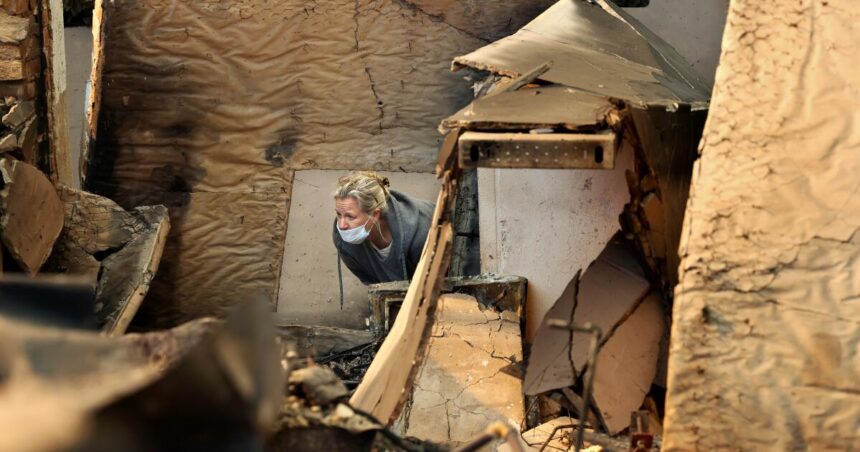
In the United States, losses from severe storms and fires exceeded $101 billion in the first half of 2025, setting a record.
That’s according to a multibillion-dollar database of disasters that the nonprofit group has restarted since the Trump administration formally abandoned the effort in May.
In a new analysis published Wednesday, scientists tallied the damage caused by severe weather through June, making it the deadliest period in 45 years of record. The analysis, conducted over a decade by the National Oceanic and Atmospheric Administration, was picked up by the nonprofit organization Climate Central.
“The increase in damage is related to human activity,” said Adam Smith, a former National Oceanic and Atmospheric Administration scientist who now manages the organization’s disaster database. “Whether it’s amplifying climate change through extreme weather events or how we choose to build, it puts us at risk and creates vulnerability.”
Much of the damage in 2025 will come from catastrophic fires in Los Angeles County. Spring tornado outbreaks and severe thunderstorms in the south-central United States cause more than $40 billion in losses, Smith said, adding that the analysis was based on the same underlying data and methodology used by NOAA.
NOAA, which also oversees the National Weather Service, has lost hundreds of employees since January through layoffs, a voluntary exit program promoted by the Trump administration, and attrition. NOAA Director of Public Affairs Kim Doster said in a statement that NOAA is refocusing resources from multibillion-dollar disaster projects and “prioritizing sound, unbiased research over projects based on uncertainty and speculation.”
The record losses come at a time when funds available to assist affected areas are decreasing. The Federal Emergency Management Agency expects to run out of money in its disaster relief fund by the end of September, according to a report submitted to Congress this summer. But FEMA has weathered legal battles over resource allocation and managed to avoid depleting the account heading into this fall.
FEMA is also authorized to continue providing relief during the federal government shutdown. As of this week, more than a dozen requests and appeals for aid were awaiting President Trump’s approval, with some states reporting long waits for aid. FEMA did not respond to requests for comment.
Although the United States avoided a direct hit from a hurricane in 2025, forecasters are closely tracking Tropical Storm Melissa, which is expected to strengthen as it passes over the warm waters of the Caribbean Sea in the coming days.
Rosenthal writes for Bloomberg.