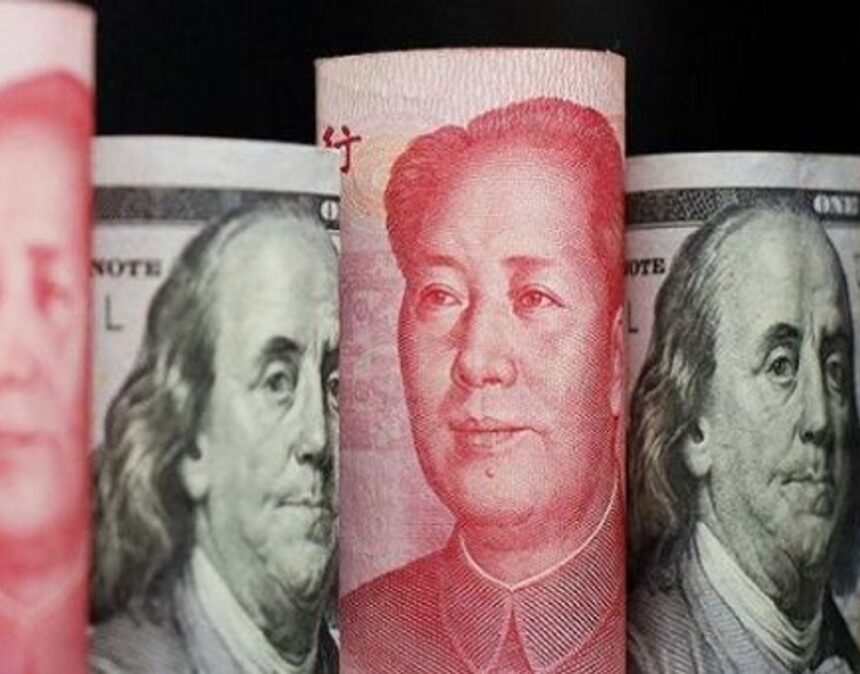
China, a BRICS member country, is stepping on the accelerator to de-dollarize as loans using the Chinese yuan rapidly increase. China’s promotion of the renminbi is working as trade and investment move away from the US dollar-based system and into a multipolar world. The country’s exposure to the US dollar has declined as companies consider the renminbi.
Deposits and bond investments by Chinese banks have quadrupled in five years to 3.4 trillion yuan ($480 billion), according to the latest data from the Financial Times. This development shows that the US dollar is no longer the central player in trade and commerce. BRICS’ de-dollarization policy is working despite its small scale, with Chinese yuan payments doubling.
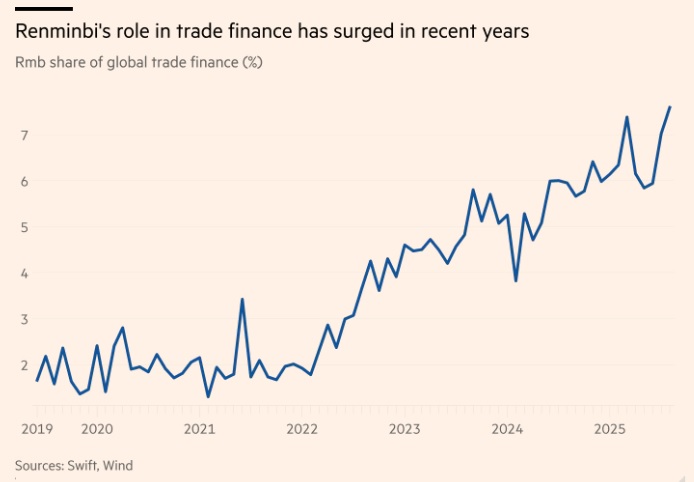
China’s importers and exporters now use the Chinese yuan for payments, the highest since December 2020. This move supports the BRICS’ de-dollarization policy and provides a source of funding for the Chinese renminbi in the global market. “From China’s perspective, this is important because it shows that trade is possible no matter what happens.” Adam Woolf, an emerging markets economist at Absolute Strategy Research in London, told the Financial Times:
De-dollarization of BRICS: Chinese Yuan rises to the top
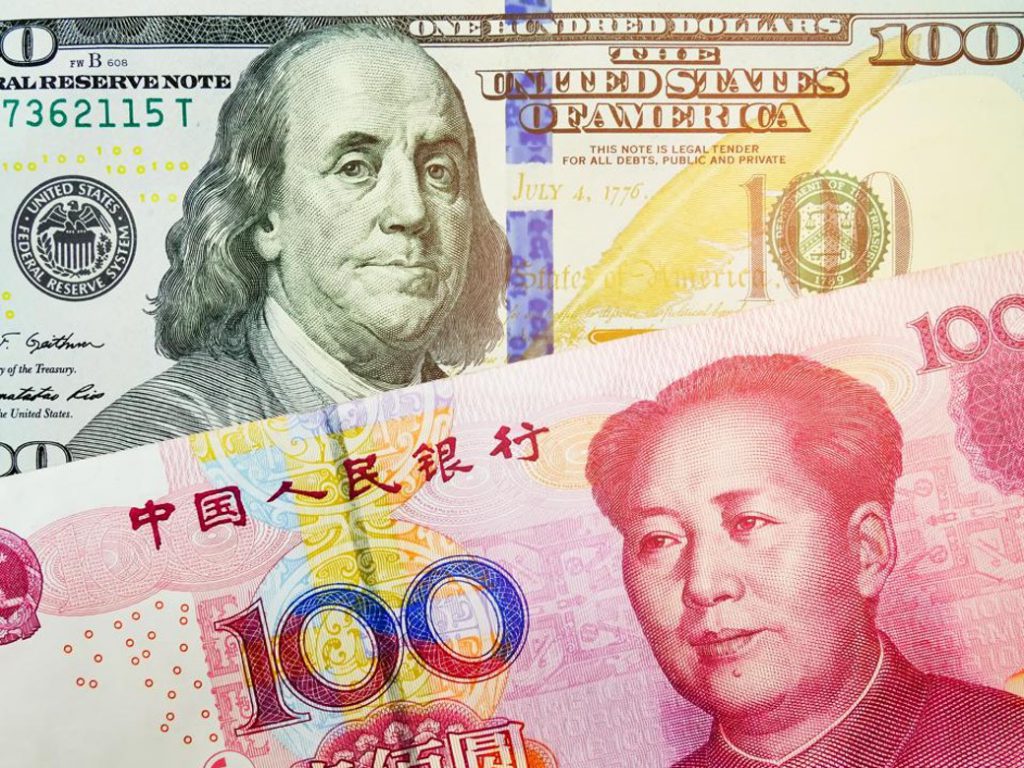
The Bank for International Settlements (BIS) took this trend into account and predicted that lending would increase by an additional $373 billion. The report assessed that the sanctions against Russia marked a turning point for BRICS to embark on a de-dollarization policy and prioritize local currencies.
“2022 marked a turning point for these borrowers, away from dollar- and euro-denominated credit and toward renminbi-denominated credit.” BIS said. As a result, the Chinese yuan became the main player, and the de-dollarization of BRICS was strengthened.
The BRICS are also pushing other countries to believe in de-dollarization while promoting their own currencies. In particular, China has persuaded other countries that using the US dollar for all cross-border transactions is disadvantageous. Chinese officials believe that “Dollar-based systems are inherently unstable and have drawbacks that multi-currency systems do not have.” Bart Hoffman, a professor at the Institute of East Asian Studies at the National University of Singapore, said.