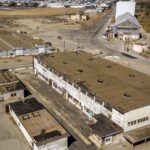
Serbian lawmakers passed a special law on Friday that clears the way for a controversial real estate project funded by an investment firm linked to President Trump’s son-in-law Jared Kushner, despite widespread public opposition and legal hurdles.
The project aims to redevelop a landmark military complex in central Belgrade, which was partially destroyed in a 1999 NATO bombing campaign, and turn it into a luxury complex with high-rise hotels, offices and shops.
The special bill was approved by a 130-40 majority in the 250-member parliament after several days of heated debate in parliament and street protests by opposition parties.
The Serbian government last year stripped the complex of its protected status and signed a 99-year lease with the US-based Kushner-linked Affinity Global Development, but the project stalled after Serbia’s organized crime prosecutors launched an investigation into whether the documents used to strip it of its status were forged.
President Aleksandar Vučić’s pro-Trump populist government claims the plan will boost both the economy and relations with the current US administration, but the project has faced fierce opposition from experts because of the building’s architectural importance and because it is seen as a symbol of resistance to US-led NATO bombing, widely seen in the Balkans as an unwarranted “invasion”.
The special law, known in Latin as “Lex Specialis,” will allow authorities to proceed with work at the site, including the demolition of the remains of two vast buildings, considered to be prime examples of mid-20th century architecture in the former Yugoslavia.
The bill does not mention details about Mr. Kushner’s company or future development projects.
“We are demolishing ruins in order to build,” Milenko Jovanov, a member of the populist Serbian Progressive Party, said in a debate, defending the project.
Critics claim that the special bill weakens Serbia’s legal system. Transparency Serbia, a corruption watchdog, warned that this “combines two of the most dangerous forms of corruption: the legalization of law violations and the adjustment of general rules to the hidden interests of a particular case.”
Vučić claimed that the ongoing judicial investigation was initiated based on demands from abroad to “prevent Serbia from establishing better relations with the Trump administration.”
The $500 million luxury mixed-use project will include a high-rise hotel, luxury apartments, office space and retail. Officials said Mr. Kushner’s company had committed to building a memorial on the site to honor all the victims of the NATO bombing campaign.
As the debate began earlier this week, hundreds of protesters rallied outside Serbia’s parliament building holding banners that read: “Culture is not for sale. We will not abandon the General Staff building.”
Opposition lawmaker Aleksandar Jovanovic said the law was a “crime” that replaced heritage sites with “casinos and jacuzzis”.
Zdravko Ponos, a former commander-in-chief of the Serbian army and now an opposition leader, told ruling party lawmakers: “We will destroy something that is a symbol of our country.”
“The agreement you signed with the most important son-in-law on earth obligated you to tear it down and liquidate it at the expense of Serbian taxpayers,” Ponos said.
Serbia was bombed for 78 days in 1999 to force then-President Slobodan Milosevic to end his crackdown on separatist Albanians in Kosovo. Anti-NATO sentiment in Serbia remains strong to this day, and many feel that the US role in revamping the military command is particularly sensitive.
Over the past year, Vucic has faced youth-led protests that have undermined his grip on power. Protesters accuse the government of rampant corruption in state projects. The protests began after a concrete canopy collapsed at a train station in the northern city of Novi Sad, which was undergoing renovations, killing 16 people.
On November 1, tens of thousands of people celebrated the anniversary of the tragedy in Novi Sad.
Earlier this year, the government of Albania, another Balkan nation, approved a $1.6 billion plan from Mr. Kushner’s company for an investment off the Adriatic coast that envisions turning a fortified communist-era island into a luxury resort.
Gec writes for The Associated Press.